Health & Lifestyle Medicine · Volume 56
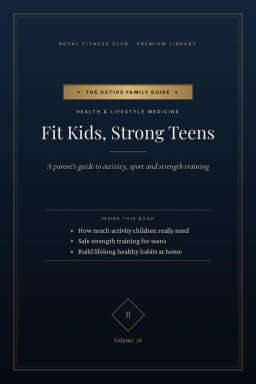
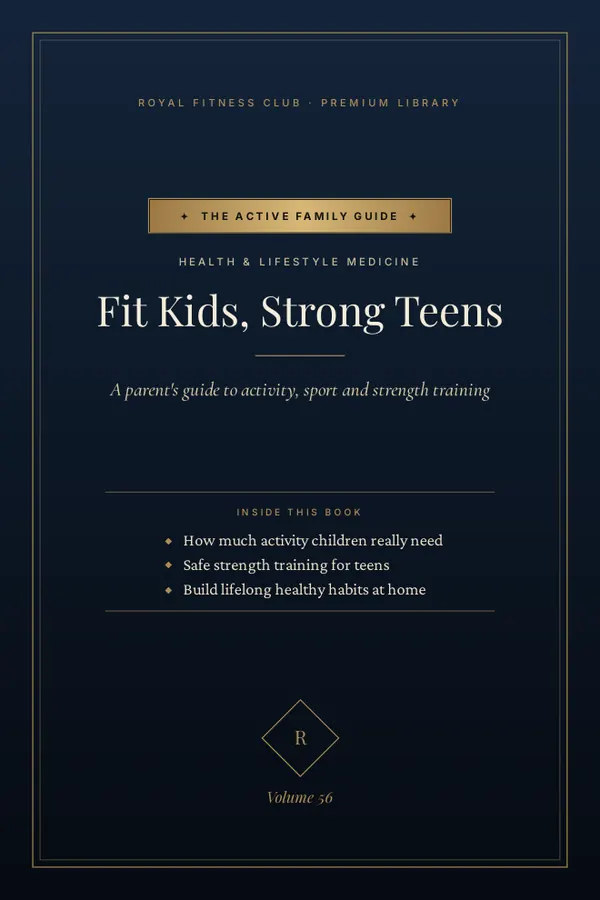
Fit Kids, Strong Teens
A parent's guide to activity, sport and strength training
The Active Family Guide
Essential edition
- How much activity children really need
- Safe strength training for teens
- Build lifelong healthy habits at home
Instant download · UPI, cards, net banking · Secured by Razorpay
Add 2+ books to your cart to save up to 30%, or get all 60 books for ₹2,999
About this book
Today's children sit more than any generation before them — for school, tuition, homework and screens. Many will never discover the joy of movement unless adults make room for it.
This book is a practical guide for parents: how much activity children actually need at each age, why play matters, how to make sport fun rather than stressful, when and how teenagers can safely start strength training, how to feed growing athletes, and how to handle screens, sleep, body image and pressure. It includes age-by-age activity plans, home games, safe beginner strength routines for teens, and warning signs that need a doctor.
For parents, teachers and coaches who want children to grow up strong, confident and active for life.
Educational guide. It supports — never replaces — care from your doctor, and contains no doses, cycles or sources.
Inside: 22 chapters
- 01Why Activity Matters
- 02How Much Is Enough?
- 03Play First
- 04Sport Without Stress
- 05Strength Training for Kids and Teens
- 06Strength Routines
- 07Feeding Active Children
- 08Screens and Sitting
- 09Sleep
- 10Body Image and Confidence
- 11Children Living With Weight Concerns
- 12Health Conditions and Activity
- 13A Family Activity Plan
- 14Twenty Home Games
- 15Girls and Sport
- 16Exams, Pressure and Mental Health
- 17Outdoor Safety
- 18For Teachers and Schools
- 19Stories
- 20Questions Parents Ask
- 21Your Family Activity Log
- 22Glossary
Read the introduction
Chapter 1
Why Activity Matters
Physical activity in childhood shapes health for life.
The Indian reality
• Long school hours, tuition and coaching classes leave little time.
• Limited safe play spaces in cities.
• Academic pressure often pushes sport aside.
• Screen time has risen sharply.
Active children often learn better, not worse. Movement is an investment in academic performance, not a distraction from it.
How Much Is Enough?
These recommendations are adapted from WHO guidelines.
What counts as moderate and vigorous?
Bone- and muscle-strengthening
Play First
For young children, play is exercise. Unstructured play builds coordination, creativity and joy in movement.
Fundamental movement skills
These are the "ABCs" of movement that underpin all sports:
Children who master these skills early are more likely to stay active as teenagers.
Ideas for play at home and nearby
Traditional Indian games like kho-kho, lagori and gilli-danda are excellent for speed, agility and teamwork — and need almost no equipment.
Sport Without Stress
Why children quit sport
Research consistently shows the top reason children drop out of sport is that it stops being fun. Other reasons include:
• Too much pressure to win.
• Harsh coaching or criticism.
• Lack of playing time.
• Early specialisation and burnout.
• Feeling not good enough.
The book continues for 60 pages across 22 chapters.
Reader reviews
No reviews yet. Only verified buyers can review a book — every buyer gets a review form on their download page, and each review is checked before it appears here.
Save with a bundle
This book is part of these offers.
5 books · save 53%
The Health & Lifestyle Medicine Collection
Exercise as medicine for real conditions
Families and adults managing diabetes, PCOS, heart health or ageing.
₹1,399₹2,995if bought singly