Strength & Physique · Volume 11
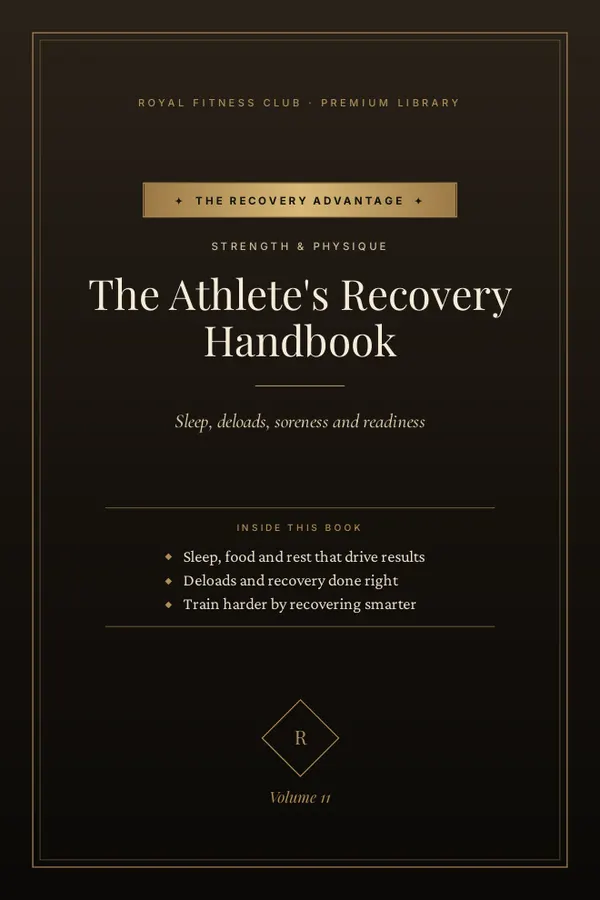
The Athlete's Recovery Handbook
Sleep, deloads, soreness and readiness
The Recovery Advantage
Core edition
- Sleep, food and rest that drive results
- Deloads and recovery done right
- Train harder by recovering smarter
Instant download · UPI, cards, net banking · Secured by Razorpay
Add 2+ books to your cart to save up to 30%, or get all 60 books for ₹2,999
About this book
Training is only half of progress. The other half happens when you're not training — while you sleep, eat, rest and live. Most people who stop progressing aren't training too little. They're recovering too little.
This handbook explains how recovery works, why sleep is the most powerful performance enhancer available, how to plan deloads, what soreness does and doesn't mean, and which recovery methods are worth your time and money. You'll learn to read your body's readiness signals, manage stress, travel and festivals, and recover from illness and injury.
For lifters, athletes and busy people who want to train hard and keep progressing.
Inside: 19 chapters
- 01Why Recovery Is Training
- 02Sleep: The Master Recovery Tool
- 03Building Better Sleep
- 04Nutrition for Recovery
- 05Soreness Explained
- 06Deloads
- 07Reading Readiness
- 08Autoregulation
- 09Recovery Methods: What Works
- 10Stress and Recovery
- 11Recovery Across Life
- 12Illness and Return to Training
- 13Recovery From Injury
- 14Overtraining: Myth and Reality
- 15Recovery by Sport
- 16A Weekly Recovery Plan
- 17Recovery Log
- 18Questions Athletes Ask
- 19Glossary
Read the introduction
Chapter 1
Why Recovery Is Training
Every training session is a stress. It depletes energy stores, creates small amounts of muscle damage, fatigues the nervous system and triggers hormonal and inflammatory responses. In the hours and days afterwards, the body repairs and adapts — becoming slightly stronger, fitter and more resilient. That adaptation is the whole point of training, and it happens during recovery.
Fitness and fatigue
A useful model separates the effects of training into two components:
• Fitness: the positive adaptation — more strength, muscle and endurance — which builds slowly and lasts.
• Fatigue: the temporary negative effect — tiredness, soreness, reduced performance — which builds quickly and fades.
Your performance on any given day is roughly fitness minus fatigue. Hard training raises both; recovery removes fatigue so the fitness can show. This is why people often perform their best after a lighter week.
You don't get stronger from training. You get stronger from recovering from training.
The book continues for 54 pages across 19 chapters.
Reader reviews
No reviews yet. Only verified buyers can review a book — every buyer gets a review form on their download page, and each review is checked before it appears here.
Save with a bundle
This book is part of these offers.
6 books · save 40%
Muscle Builder Stack
Size and strength, done right
Lifters chasing muscle: hypertrophy, the big three, protein, lean bulking, supplements and recovery.
₹1,999₹3,344if bought singly15 books · save 50%
The Strength & Physique Collection
Every training book we publish
Lifters at any level — from first session to coaching others.
₹4,199₹8,435if bought singly