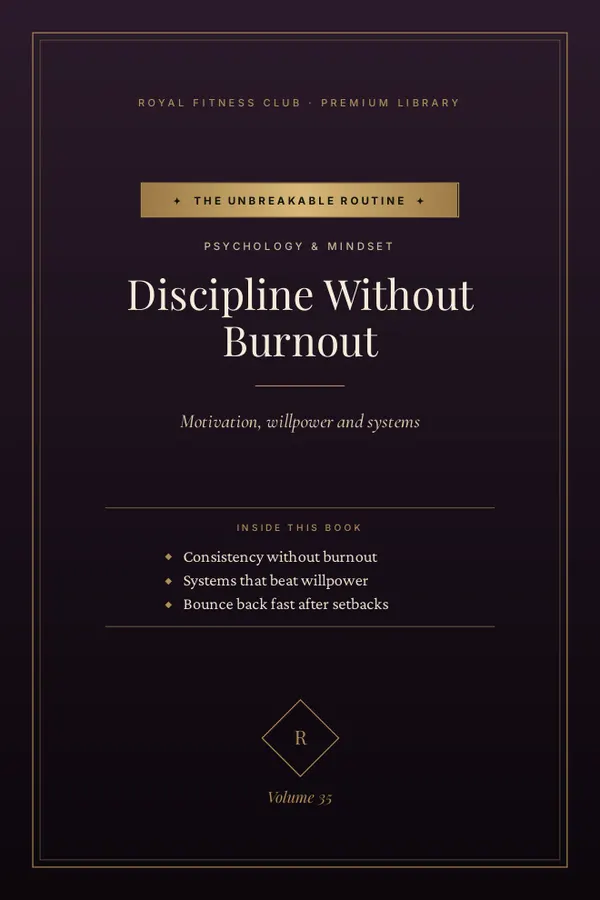
Psychology & Mindset · Volume 35
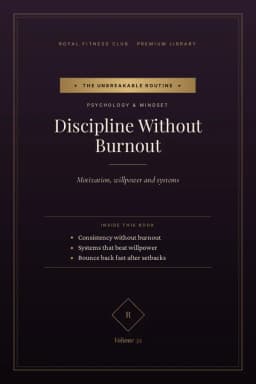
Discipline Without Burnout
Motivation, willpower and systems
The Unbreakable Routine
Essential edition
- Consistency without burnout
- Systems that beat willpower
- Bounce back fast after setbacks
Instant download · UPI, cards, net banking · Secured by Razorpay
Add 2+ books to your cart to save up to 30%, or get all 60 books for ₹2,999
About this book
Social media sells discipline as 4 a.m. alarms, cold showers and "no days off". Then people burn out, quit, and decide they're simply not disciplined people.
This book offers a different model. It explains what motivation and willpower actually are, why relying on them fails, and how to build systems — environments, routines, identity and recovery — that keep you consistent for years rather than weeks. It covers procrastination, perfectionism, self-compassion, burnout warning signs and how to come back after falling off.
Sustainable discipline for people with real lives.
Inside: 21 chapters
- 01The Discipline Myth
- 02Motivation
- 03Willpower
- 04Systems Beat Goals
- 05Building Your System
- 06Identity
- 07Procrastination
- 08Perfectionism
- 09Self-Compassion
- 10Burnout
- 11Recovery
- 12Falling Off and Getting Back On
- 13Seasons of Effort
- 14The Morning and Evening Anchors
- 15Motivation Tools
- 16Discipline at Work
- 17Saying No
- 18Stories of Sustainable Discipline
- 19Questions People Ask
- 20Your Discipline System
- 21Glossary
Read the introduction
Chapter 1
The Discipline Myth
The popular image of discipline: wake at 4 a.m., train twice a day, eat perfectly, never miss, never complain. Some people genuinely thrive on that. Most crash.
What usually happens
The problem usually isn't a lack of discipline. It's a plan that requires a level of discipline no normal life can sustain.
A better definition
Discipline is the ability to keep doing what matters, consistently, over time — including after setbacks. It's not intensity. It's continuity.
Motivation
Types of motivation
Self-determination theory (Deci and Ryan) distinguishes:
The three basic needs
Self-determination theory suggests motivation thrives when three needs are met:
• Autonomy: feeling that you chose this.
• Competence: feeling capable and progressing.
• Relatedness: feeling connected to others.
Practical implications
• Choose forms of exercise you enjoy.
• Track progress to build competence.
• Train with others or join a community.
• Connect your habits to values, not just appearance.
Motivation follows action
Motivation often comes after starting, not before. Waiting to "feel like it" means waiting forever.
The book continues for 56 pages across 21 chapters.
Reader reviews
No reviews yet. Only verified buyers can review a book — every buyer gets a review form on their download page, and each review is checked before it appears here.
Save with a bundle
This book is part of these offers.
9 books · save 52%
The Psychology & Mindset Collection
Habits, discipline and resilience
People who know what to do but struggle to keep doing it.
₹2,099₹4,391if bought singly