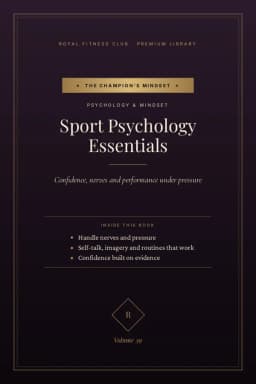
Psychology & Mindset · Volume 39
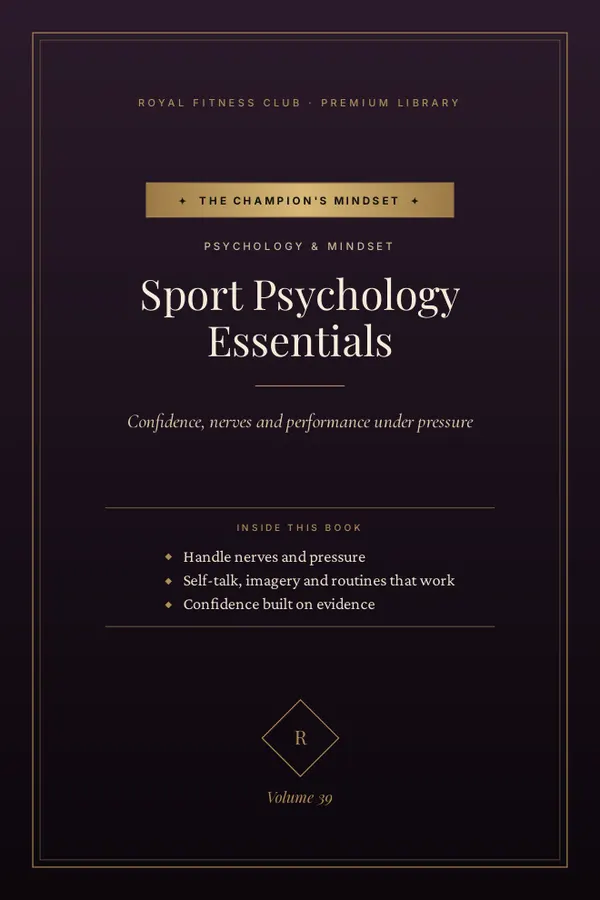
Sport Psychology Essentials
Confidence, nerves and performance under pressure
The Champion's Mindset
Core edition
- Handle nerves and pressure
- Self-talk, imagery and routines that work
- Confidence built on evidence
Instant download · UPI, cards, net banking · Secured by Razorpay
Add 2+ books to your cart to save up to 30%, or get all 60 books for ₹2,999
About this book
At the highest levels, physical differences between competitors can be small. What separates them on the day is often the mind: confidence, focus, composure and the ability to bounce back from mistakes.
This book introduces the core skills of sport psychology — goal setting, self-talk, imagery, arousal regulation, concentration, routines, confidence building and resilience — with practical exercises for athletes, lifters, runners and team players. It also covers motivation, team dynamics, injury, and athlete mental health.
Mental training for anyone who competes — against others or themselves.
Inside: 22 chapters
- 01What Is Sport Psychology?
- 02Goal Setting
- 03Self-Talk
- 04Imagery
- 05Arousal and Nerves
- 06Concentration
- 07Routines
- 08Confidence
- 09Handling Mistakes
- 10Motivation and Burnout
- 11Pressure and Choking
- 12Team Psychology
- 13Injury and Return
- 14Athlete Mental Health
- 15Competition Day
- 16Mental Skills Training Plan
- 17Sport-Specific Mental Skills
- 18The Parent and Coach Factor
- 19Stories
- 20Questions Athletes Ask
- 21Your Mental Skills Workbook
- 22Glossary
Read the introduction
Chapter 1
What Is Sport Psychology?
Sport psychology is the study and application of psychological principles to sport and exercise. It aims to help athletes:
• Perform more consistently under pressure.
• Enjoy their sport more.
• Develop as people, not just performers.
• Maintain mental health.
Mental skills are trainable
Like strength or speed, mental skills improve with deliberate practice. Elite athletes typically train them as part of their preparation.
Most athletes spend 90% of their time training the body and 10% thinking about the mind — then say that 90% of performance on the day is mental.
The performance equation
Performance = Potential − Interference (adapted from Timothy Gallwey's The Inner Game of Tennis)
Interference includes fear, doubt, over-thinking, distraction and tension. Sport psychology works to reduce interference.
Goal Setting
Types of goals
The best results usually come from combining all three, with most attention on process goals during competition.
SMART goals
Specific, Measurable, Achievable, Relevant, Time-bound. See Vol. 42 for more.
The book continues for 57 pages across 22 chapters.
Reader reviews
No reviews yet. Only verified buyers can review a book — every buyer gets a review form on their download page, and each review is checked before it appears here.
Save with a bundle
This book is part of these offers.
6 books · save 41%
The Coach's Toolkit
Programme, coach and keep clients
Personal trainers and coaches: programming, client psychology, motivation, supplements and injury prevention.
₹2,299₹3,894if bought singly9 books · save 52%
The Psychology & Mindset Collection
Habits, discipline and resilience
People who know what to do but struggle to keep doing it.
₹2,099₹4,391if bought singly