Peptides & New Compounds · Volume 47
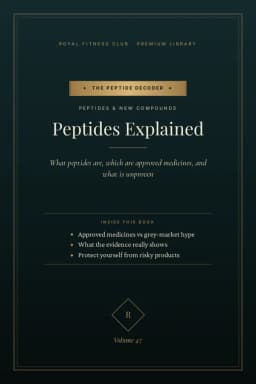
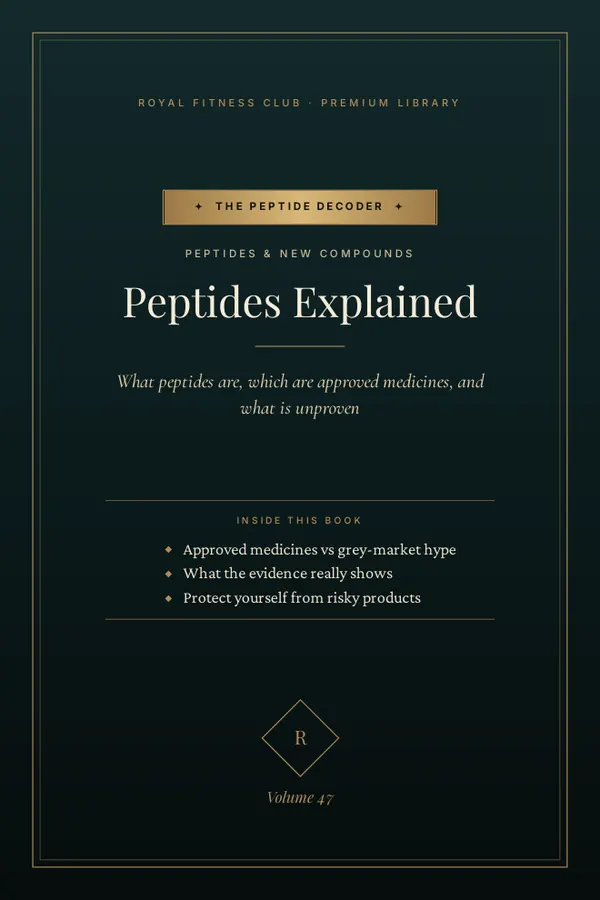
Peptides Explained
What peptides are, which are approved medicines, and what is unproven
The Peptide Decoder
Signature edition
- Approved medicines vs grey-market hype
- What the evidence really shows
- Protect yourself from risky products
Instant download · UPI, cards, net banking · Secured by Razorpay
Add 2+ books to your cart to save up to 30%, or get all 60 books for ₹2,999
About this book
"Peptides" are everywhere: in gym conversations, wellness clinics, podcasts and online shops promising faster healing, fat loss, better sleep and anti-ageing. Some peptides are among the most important medicines in the world. Others are sold in grey-market vials with almost no human research behind them.
This book explains what peptides are, how peptide medicines work, which ones are approved and for what, and what the evidence does — and doesn't — show for popular unapproved peptides such as BPC-157, TB-500 and growth hormone secretagogues. It covers quality and contamination risks, legal and sporting status, and how to evaluate claims.
Clear science for a confusing market.
Educational guide. It supports — never replaces — care from your doctor, and contains no doses, cycles or sources.
Inside: 24 chapters
- 01What Are Peptides?
- 02How Peptide Medicines Work
- 03Approved Peptide Medicines
- 04The "Research Peptide" Market
- 05BPC-157
- 06TB-500 and Thymosin Beta-4
- 07Growth Hormone Secretagogues
- 08Melanotan and Tanning Peptides
- 09Collagen Peptides
- 10Other Peptides in the Marketplace
- 11Quality and Contamination
- 12Law and Sport
- 13Evaluating Claims
- 14Better Alternatives
- 15A Brief History
- 16How a Medicine Gets Approved
- 17Compounding
- 18Growth Hormone Itself
- 19For Coaches and Gym Owners
- 20Wellness Clinics and Peptide "Therapy"
- 21Stories
- 22Questions People Ask
- 23Your Evaluation Worksheet
- 24Glossary
Read the introduction
Chapter 1
What Are Peptides?
Peptides are short chains of amino acids — the same building blocks that make up proteins. There's no strict cut-off, but chains of roughly 2–50 amino acids are usually called peptides, while longer chains are called proteins.
Peptides in your body
Your body makes thousands of peptides that act as:
• Hormones: insulin, glucagon, oxytocin, vasopressin, GLP-1.
• Neurotransmitters and neuromodulators: endorphins, substance P.
• Antimicrobial defences: defensins.
• Signalling molecules for growth, repair and appetite.
Peptides in food
Dietary proteins are broken down into peptides and amino acids during digestion. Some food-derived peptides (in milk, for instance) are studied for biological effects, but most are digested before reaching the bloodstream in significant amounts.
"Peptide" describes a type of molecule, not a quality. Insulin is a peptide. So are snake venoms. Being a peptide doesn't make something safe, natural or effective.
How Peptide Medicines Work
Receptors
Most peptide hormones act by binding to specific receptors on cells, triggering a cascade of effects — like a key fitting a lock.
The book continues for 59 pages across 24 chapters.
Reader reviews
No reviews yet. Only verified buyers can review a book — every buyer gets a review form on their download page, and each review is checked before it appears here.
Save with a bundle
This book is part of these offers.
4 books · save 53%
The Peptides & New Compounds Collection
Peptides, GLP-1 and longevity claims, decoded
Anyone weighing a new compound or medicine and wanting the evidence first.
₹999₹2,146if bought singly