Peptides & New Compounds · Volume 50
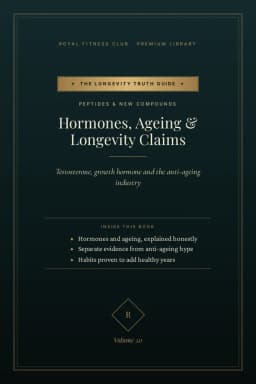
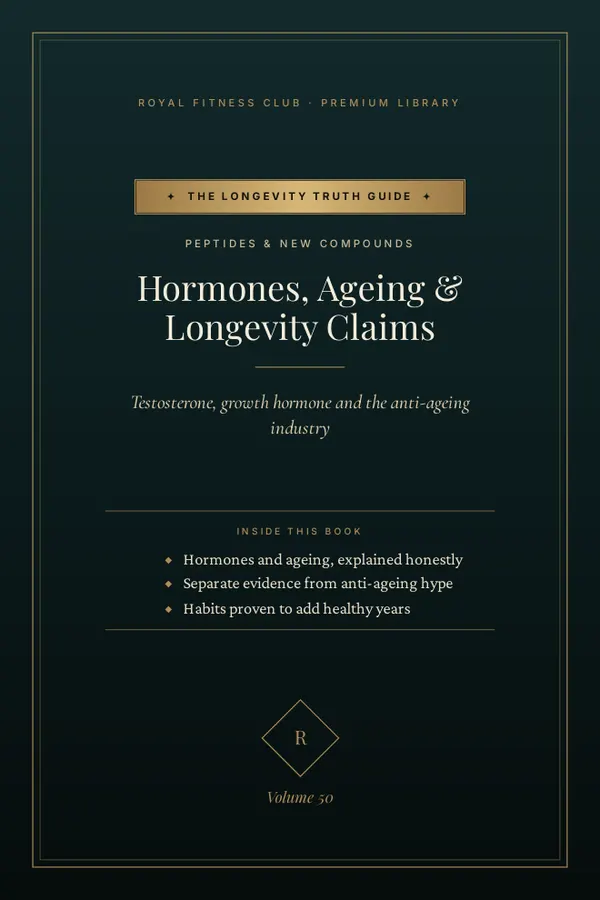
Hormones, Ageing & Longevity Claims
Testosterone, growth hormone and the anti-ageing industry
The Longevity Truth Guide
Core edition
- Hormones and ageing, explained honestly
- Separate evidence from anti-ageing hype
- Habits proven to add healthy years
Instant download · UPI, cards, net banking · Secured by Razorpay
Add 2+ books to your cart to save up to 30%, or get all 60 books for ₹2,999
About this book
Ageing is inevitable. Selling a cure for it is big business. Clinics offer testosterone for "low energy", growth hormone for "youthfulness", and supplements and injections promising to add decades of life.
This book separates evidence from marketing. It explains how hormones change with age; when testosterone therapy is medically appropriate and when it isn't; what menopausal hormone therapy can and can't do; why growth hormone isn't an anti-ageing drug; what the science says about DHEA, NAD+, metformin, rapamycin and other "longevity" compounds; and which habits have the strongest evidence for a longer, healthier life.
A grounded guide for anyone who wants to age well — without being sold false hope.
Educational guide. It supports — never replaces — care from your doctor, and contains no doses, cycles or sources.
Inside: 23 chapters
- 01How Hormones Change with Age
- 02Low Testosterone in Men
- 03Testosterone Therapy
- 04"Low T" Clinics and Marketing
- 05Menopause and Hormone Therapy
- 06Growth Hormone
- 07DHEA
- 08The Longevity Market
- 09Biological Age Tests
- 10What Actually Works
- 11Muscle and Bone
- 12Cardiovascular Fitness
- 13Preventive Health Checks
- 14Ageing Well, Mentally
- 15Thyroid and Ageing
- 16Melatonin and Sleep in Later Life
- 17Skin Ageing
- 18The Anti-Ageing Industry
- 19A Weekly Healthy-Ageing Template
- 20Stories
- 21Questions People Ask
- 22Your Healthy Ageing Plan
- 23Glossary
Read the introduction
Chapter 1
How Hormones Change with Age
Normal ageing vs disease
Some hormonal decline is a normal part of ageing. The key medical question is whether a person has a condition that needs treatment — not whether their levels match those of a 25-year-old.
"Optimising" hormones to youthful levels isn't the same as treating a disease — and doesn't have the same evidence base.
Low Testosterone in Men
Male hypogonadism
A clinical condition in which the body doesn't produce enough testosterone, diagnosed through:
• Symptoms consistent with low testosterone (see below).
• Repeatedly low blood levels, usually measured in the morning on at least two occasions.
• Investigation of the cause (e.g. pituitary problems, testicular problems, medications, obesity).
Possible symptoms
Many of the less specific symptoms have other common causes: poor sleep, depression, obesity, diabetes, alcohol, stress and other illnesses.
Lifestyle factors that lower testosterone
• Obesity (especially abdominal fat).
• Poor sleep and sleep apnoea.
• Heavy alcohol use.
• Chronic stress.
• Some medicines (e.g. opioids, glucocorticoids).
• Past anabolic steroid use (Vol. 45).
Moderate evidence: Weight loss, better sleep and reduced alcohol can raise testosterone in some men with low-normal levels.
The book continues for 58 pages across 23 chapters.
Reader reviews
No reviews yet. Only verified buyers can review a book — every buyer gets a review form on their download page, and each review is checked before it appears here.
Save with a bundle
This book is part of these offers.
6 books · save 41%
Strong After 40 Longevity Pack
Stay strong, mobile and independent
Adults over 40: strength, mobility, heart health, everyday function and honest longevity science.
₹1,899₹3,244if bought singly4 books · save 53%
The Peptides & New Compounds Collection
Peptides, GLP-1 and longevity claims, decoded
Anyone weighing a new compound or medicine and wanting the evidence first.
₹999₹2,146if bought singly